
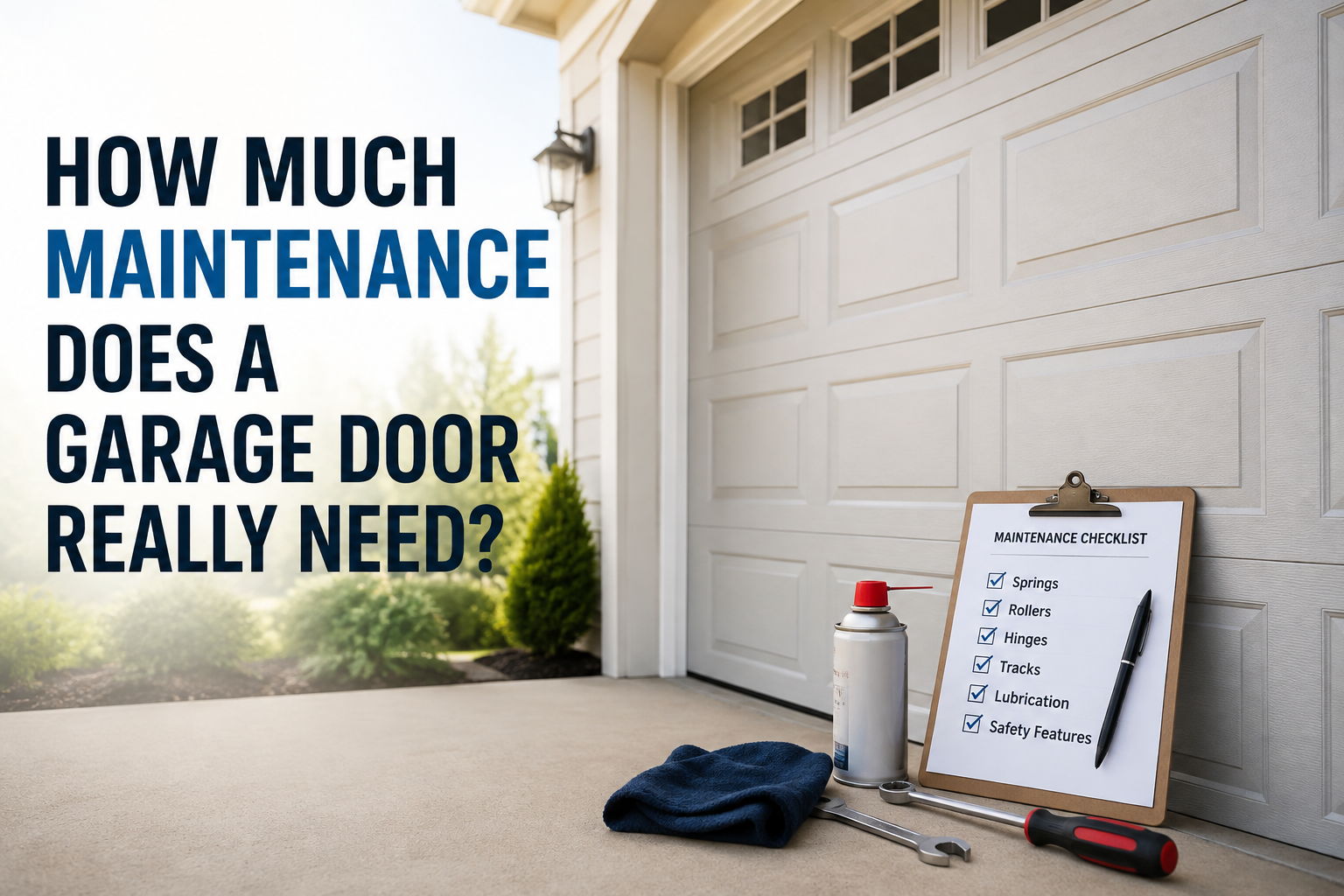
Most homeowners don’t think much about their garage door until something stops working.
The door opens. The door closes. Life goes on.
But here’s the reality: your garage door is often the largest moving object in your home, and it may operate more than 1,500 times per year. Like any mechanical system, a little maintenance can go a long way toward preventing unexpected breakdowns.
So how much maintenance does a garage door actually need?
Less than you might think—but more than most homeowners are currently doing.
The Five-Minute Monthly Inspection
A quick visual inspection once a month can help identify small issues before they become expensive repairs.
Look for:
- Frayed cables
- Loose hinges
- Bent tracks
- Rusty hardware
- Worn rollers
Also pay attention to unusual sounds. A garage door that suddenly becomes noisier is often telling you something needs attention.
Lubrication Matters More Than Most People Realize
One of the easiest maintenance tasks is lubricating moving parts.
Garage door lubricant can help reduce wear on:
- Rollers
- Hinges
- Bearings
- Springs
Most manufacturers recommend lubrication every six months, although coastal environments may require more frequent attention.
Avoid using heavy grease or general-purpose products that attract dirt and debris.
Test the Door Balance
An unbalanced garage door puts extra strain on the opener and spring system.
To perform a basic balance test:
- Disconnect the opener.
- Raise the door halfway.
- Carefully release it.
A properly balanced door should remain relatively stationary.
If it quickly rises or falls, the spring system may require adjustment.
Don’t Ignore Weather Changes
Garage doors are constantly exposed to changing temperatures and humidity levels.
In places like Knoxville and Raleigh, seasonal temperature swings can affect moving components and weather seals.
In coastal areas such as Myrtle Beach, salt air and humidity can accelerate corrosion on metal components.
These environmental factors make periodic inspections especially valuable.
Check Your Weatherstripping
Weatherstripping helps keep out:
- Rain
- Dirt
- Insects
- Humidity
- Drafts
Cracked or brittle seals can reduce energy efficiency and allow moisture into the garage.
Fortunately, replacing worn weatherstripping is often relatively inexpensive.
Safety Features Should Be Tested Annually
Modern garage doors include important safety systems.
At least once per year, homeowners should test:
- Photo-eye sensors
- Auto-reverse mechanisms
- Emergency release functions
These components play a critical role in preventing accidents and injuries.
FAQs
How often should a garage door be professionally serviced?
Many manufacturers recommend a professional inspection and tune-up once per year.
Can maintenance extend garage door lifespan?
Absolutely. Regular maintenance can help reduce wear and identify issues before they cause larger failures.
What maintenance should homeowners avoid?
Spring and cable repairs should generally be left to trained professionals due to the high tension involved.
Final Thoughts
Garage door maintenance doesn’t need to be complicated. A few minutes of inspection, occasional lubrication, and annual professional service can help improve reliability, reduce repair costs, and extend the life of your system.
Homeowners looking for maintenance guidance can learn more from Skylift Garage Doors, contact their team with questions, or schedule a garage door tune-up online.