
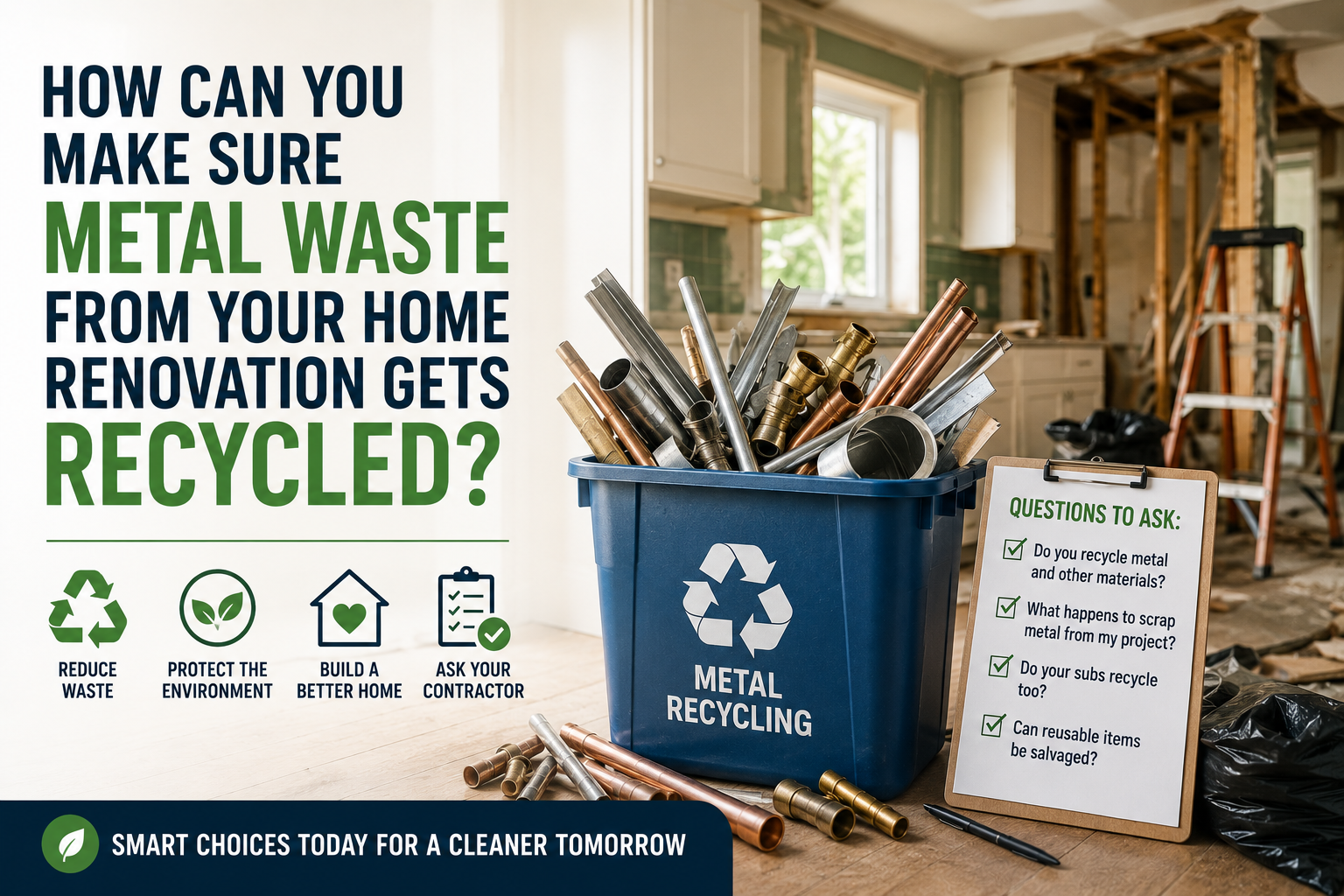
A home renovation can generate a surprising amount of waste. Old plumbing comes out of the walls. Light fixtures and wiring are replaced. HVAC equipment gets upgraded. Appliances disappear. Gutters, siding, roofing components, hardware and other building materials may all end up in the debris pile.
But not everything removed from your home needs to end up in a landfill.
Many renovation projects generate recyclable metals, including copper, aluminum, brass, steel and iron. If reducing waste matters to you, one of the best things you can do is talk to your remodeling contractor about recycling before the project begins.
You don’t necessarily need to sort the material or find a recycling facility yourself. Instead, you can make responsible waste handling one of the factors you consider when choosing a contractor.
What Types of Metal Can Come Out of a Home Renovation?
The amount and type of scrap metal generated depends heavily on the project. A cosmetic bedroom remodel may produce almost none, while renovating an older kitchen, bathroom or entire home can generate quite a bit.
Common sources include:
- Copper: Plumbing pipes, electrical wiring and some HVAC components
- Brass: Plumbing fittings, valves, faucets and hardware
- Aluminum: Gutters, siding, window components, ductwork and some fixtures
- Steel: Appliances, structural components, fasteners, ductwork and other building materials
- Iron: Older plumbing, radiators and certain structural or decorative components
- Stainless steel: Sinks, appliances, fixtures and some kitchen equipment
Even relatively small amounts can add up when contractors perform renovations regularly.
That makes the way your contractor handles demolition debris worth asking about.
Should You Ask a Remodeling Contractor About Recycling?
Yes, particularly if reducing the environmental impact of your renovation is important to you.
Recycling practices aren’t always something homeowners think to discuss when interviewing contractors. Conversations usually center on price, schedules, materials, licenses, insurance and what the finished space will look like.
Waste removal may simply appear as another line on the estimate.
But “How will you remove the debris?” and “What happens to recyclable materials?” are two different questions.
Ask prospective contractors whether they separate recyclable materials from general construction waste and what they typically do with scrap metal.
You don’t need to demand an elaborate environmental policy. A straightforward conversation can tell you quite a bit about how the company approaches waste.
What Questions Should You Ask Before Hiring a Contractor?
If recycling is one of your priorities, consider asking:
Do you separate scrap metal from general demolition debris?
This is probably the most useful starting point. If everything goes directly into the same disposal container, recyclable materials may be more difficult to recover later.
What kinds of construction materials do you typically recycle?
Some contractors may recycle metal but not other materials. Others may have systems for handling cardboard, wood, concrete or other construction debris as well.
What happens to copper, aluminum, brass and steel removed from the house?
You don’t necessarily need to know the name of the recycling company. You’re trying to understand whether the contractor has an established process.
Do your plumbing, HVAC or electrical subcontractors handle their own scrap?
On larger renovations, different trades may be responsible for the material they remove. Your general contractor may not personally handle every piece of recyclable metal.
Can reusable materials be salvaged instead of discarded?
Recycling isn’t always the first option. Cabinets, doors, fixtures, hardware and certain building materials in usable condition may be candidates for reuse or donation.
These questions can help you distinguish between a contractor who has thought about construction waste and one who simply treats everything removed from the house as garbage.
Why Is Metal Particularly Worth Separating?
Metal has an important advantage over many types of construction debris: it can often be recovered and used as raw material again.
Copper is a good example.
Renovating an older home might involve replacing copper plumbing, electrical wiring or mechanical components. Rather than treating that copper as ordinary demolition waste, it can enter the scrap-metal recycling stream.
The same principle applies to aluminum, brass, steel and numerous other metals.
Once collected, scrap can be sorted and processed so the material can ultimately be used again in manufacturing. Recycling therefore helps keep usable material out of the waste stream while reducing demand for newly extracted raw materials.
Who Actually Recycles the Metal From a Renovation?
This is where the recycling chain can become confusing for homeowners.
The company remodeling your bathroom isn’t necessarily the company that ultimately processes the old copper pipe.
Instead, there may be several businesses involved.
A plumber, electrician, HVAC contractor or remodeler may separate and collect scrap generated by projects. A contractor generating larger quantities can then work with companies that specialize in commercial and industrial metal recycling.
Those recycling companies may handle sorting, processing, transportation and other steps required to move scrap material back into the manufacturing supply chain.
For example, Consolidated Resources Inc. works with commercial and industrial customers to recycle materials including copper, brass, aluminum, stainless steel, iron, steel and specialty metals.
That distinction is important for homeowners: you don’t necessarily have to locate the company at the end of the recycling chain yourself.
Your role can be much simpler—choose contractors who have responsible processes for the material they remove from your home.
Does Every Piece of Metal Need to Be Recycled?
Recycling is worthwhile, but homeowners should also keep the scale of the project in perspective.
Replacing two cabinet handles doesn’t require an extensive waste-management strategy.
A whole-house renovation is different.
Major kitchen renovations, bathroom remodels, plumbing replacements, HVAC upgrades, roofing projects and extensive demolition can generate substantially more material. That’s when asking about recycling practices becomes particularly worthwhile.
The goal isn’t to make a remodeling project unnecessarily complicated. It’s to prevent obviously recoverable material from being discarded simply because nobody discussed what should happen to it.
Recycling Isn’t the Same as Reusing
Another useful question during a renovation is whether something needs to become waste at all.
A fixture can be outdated for your renovation without being unusable.
Depending on its condition, items such as these may have potential for reuse:
- Lighting fixtures
- Faucets and sinks
- Cabinet hardware
- Doors
- Appliances
- Shelving
- Decorative metalwork
- Certain architectural materials
Selling, donating or reusing an intact item can sometimes make more sense than breaking it down for recycling.
A simple hierarchy can help:
Reuse when practical. Recycle when appropriate. Dispose when necessary.
Not every material will fit neatly into one of those categories, but thinking about them before demolition starts gives you more options.
What If Your Contractor Doesn’t Recycle?
Don’t automatically assume that makes the contractor irresponsible.
Recycling options can vary considerably by location, project size, material and the waste-management services available in a particular area.
Instead, ask why.
A contractor may use a construction waste company that sorts materials after pickup. Individual subcontractors may remove recyclable scrap themselves. Or local disposal infrastructure may make certain materials difficult to recycle economically.
You’re looking for a reasonable explanation and evidence that the contractor has actually considered the issue.
If one contractor has an established recycling process and another sends everything directly to a landfill, however, that may become one more factor in your hiring decision.
Can Recycling Be Included in Your Renovation Plans?
For a significant renovation, waste management can be discussed just like any other project expectation.
Before signing the contract, ask how demolition debris will be handled and whether there are particular materials you want recycled, salvaged or preserved.
If you have strong preferences, get those expectations clarified before demolition begins.
It’s much easier to save an old fixture or separate recyclable metal before it disappears into a container filled with mixed construction debris.
A More Sustainable Renovation Starts Before Demolition
Choosing sustainable flooring, energy-efficient appliances and environmentally responsible building materials can all make a renovation greener.
But don’t forget about the materials leaving the house.
Old copper pipes, aluminum components, brass fixtures and steel building materials may still have useful life as recyclable raw material even when they no longer have a place in your remodeled home.
You don’t need to become a scrap-metal expert to make a difference.
Before hiring a remodeling contractor, simply ask:
“What happens to the recyclable materials you remove from my home?”
The answer can tell you a lot about where your renovation waste is going—and help you choose a contractor whose practices better align with your priorities.